
Currently Empty: $0.00
The Timeless Tool for Mental Math Mastery
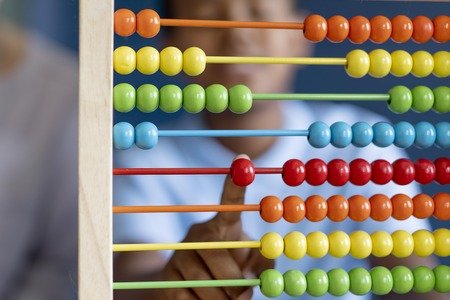
The abacus, an ancient calculating device with roots in Mesopotamia, China, and other civilizations, uses a frame with sliding beads to perform arithmetic visually. Often featuring colorful beads on rods, it's a hands-on way to teach addition, subtraction, multiplication, and division, especially to children. In today's tech-driven world, the abacus remains relevant for developing mental math skills and cognitive abilities.
(see the generated image above)
History and Evolution of the Abacus
Dating back over 4,000 years, the abacus evolved from simple counting boards to sophisticated tools like the Chinese suanpan or Japanese soroban. Each rod represents a place value, with beads moved to denote numbers. Modern versions include digital simulations, but traditional wooden ones are prized for tactile learning.
Benefits of Abacus Training
Abacus use boosts brain development by engaging both hemispheres, improving focus, memory, and speed. Studies show it enhances math proficiency, helps with conditions like dyscalculia, and builds confidence in young learners. For adults, it's useful for quick calculations in business or daily life, reducing reliance on gadgets.
Getting Started with Abacus Basics
Master the fundamentals:
Bead Representation: Lower beads = 1 each (up to 4), upper bead = 5. Example: 7 is upper bead + 2 lower.
Addition: Combine beads on rods. Example: 123 + 456 = move to total 579.
Subtraction: Borrow as needed. Example: 500 - 234 = adjust beads to 266.
Multiplication: Repeat additions. Example: 12 × 3 = add 12 three times for 36.
Division: Subtract multiples. Example: 48 ÷ 4 = subtract 4 twelve times for 12.
Use a physical abacus for practice, starting with single-digit operations.
Advanced Techniques and Applications
Progress to:
Decimals and Fractions: Designate rods for decimal places. Example: 2.5 + 1.3 = 3.8.
Mental Abacus: Visualize the tool for calculator-like speed without physical aid.
Complex Operations: Handle square roots or percentages through patterns.
Apply in real scenarios like shopping totals or financial planning. Educational programs often combine abacus with games for engagement.
Conclusion
The abacus bridges ancient wisdom with modern education, proving that simple tools can yield profound results. Incorporate it into your learning to experience sharper, more intuitive math skills.